Brushing your child’s teeth changes quite a bit between their first tooth and the day they’re ready to take over the job themselves.
In the early years, you’ll be doing most of the brushing for them. As they get older, they’ll naturally want to take over, but they’ll still need some help and supervision to make sure they’re brushing thoroughly.
The Australian Dental Association (ADA) recommends brushing for two minutes twice a day, using an age-appropriate fluoride toothpaste, along with regular dental check-ups. For younger children, parents or carers should actively supervise and help with brushing where needed.
So, what should toothbrushing look like at each age? Here’s a simple guide.
Babies: from the first tooth
When should you first start brushing your baby’s teeth? As soon as the first tooth appears.
Those first tiny teeth still need protection from tooth decay. Use a small, soft toothbrush (or even a clean damp cloth initially) and gently clean the teeth once or twice a day, ideally, both in the morning and before bedtime at night
If you can only manage once a day , brushing just before bedtime is the best time.
For children under 18 months of age, the ADA recommends cleaning the teeth without toothpaste for children at low risk of tooth decay, unless your dentist advises otherwise.
At this stage, the aim is to keep those first teeth clean while also helping your baby become used to having their mouth and teeth brushed.
Toddlers: 18 months to 3 years
From around 18 months, you can introduce a small amount of low-fluoride children’s toothpaste. Encourage your child to spit the toothpaste out rather than swallow it, with no need to rinse afterwards.
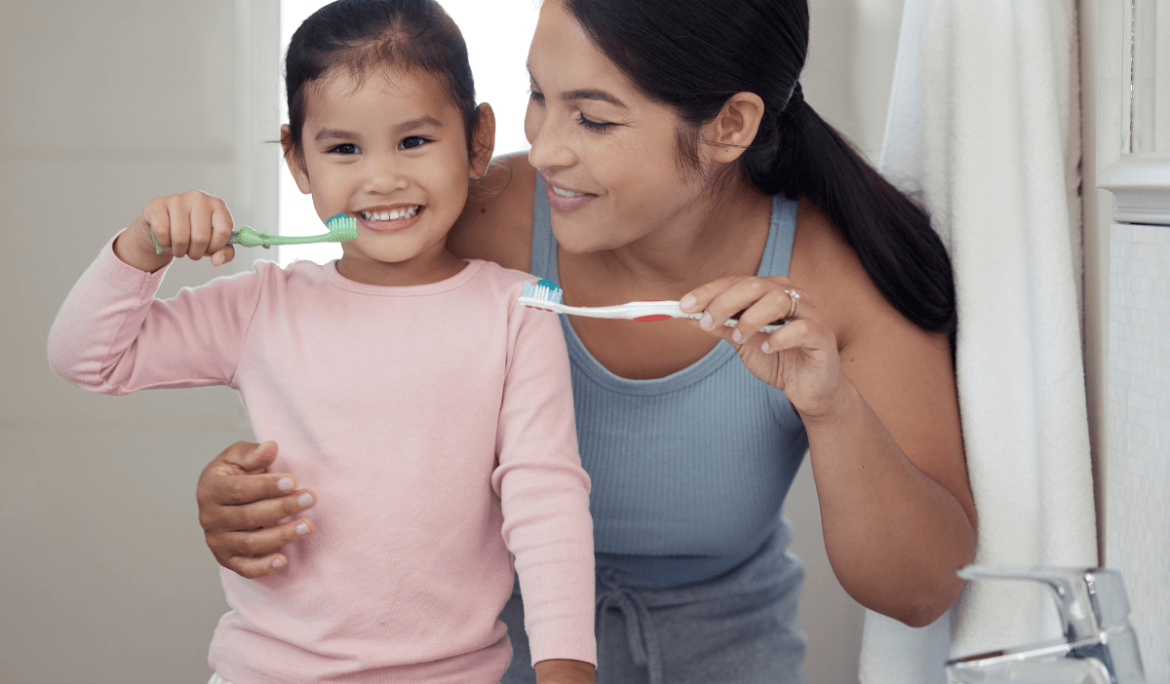
Brush twice each day using a small, soft toothbrush. Toddlers often want to have a go themselves, which is worth encouraging. Let them hold the brush or brush first, then take over to make sure every tooth has been cleaned.
Try to brush the outside, inside, and chewing surfaces of the teeth, including gently around the gumline. And if brushing occasionally involves negotiation, distraction, or a slightly unusual location around the house, that’s perfectly fine. Consistency matters more than making every brushing session perfect.
Preschoolers: 3 to 5 years
By around three years old, most children have all 20 baby teeth, so there is suddenly a lot more to brush.
Continue brushing twice a day with a pea-sized amount of low-fluoride toothpaste. Your child can do more of the brushing themselves, but they still need an adult to finish the job.
A useful approach is to let them brush first and then say, “My turn to check.” Aim for around two minutes, making sure all surfaces of the teeth are cleaned.
Early primary school: around 5 to 8 years
This is an important stage because adult teeth start arriving, usually from around six years of age. These new teeth need to last for life, so good brushing becomes particularly important.
Once children reach around six years, the ADA recommends using a standard fluoride toothpaste, generally containing 1000–1500 ppm fluoride, unless your dentist recommends something different based on your child’s individual needs.
Children might look completely independent by this age, but their brushing skills are still developing. Most need supervision or some help until they have developed the skills to brush effectively on their own.
From 8 years and up
By this stage, many children can brush effectively on their own.
Parents can gradually move from doing the brushing to checking how it’s going. An occasional reminder about those easy-to-miss back teeth or brushing for the full two minutes is recommended.
Between six and 12 years, children have a mixture of baby and adult teeth. By around 12, most adult teeth have arrived in the majority of children (apart from wisdom teeth).
Keeping the twice-daily routine going through these years helps brushing become something they simply do rather than something they have to remember.
What’s the best brushing routine for children?
Whatever their age, the basics are quite simple:
- Brush for two minutes twice a day, including before bed.
- Use a soft toothbrush that fits comfortably in your child’s mouth.
- Clean every surface of the teeth, including around the gumline and back teeth.
- Use an age-appropriate toothpaste, introducing fluoride once your child turns six (unless your dentist recommends otherwise)
- Supervise and help younger children until they can brush themselves effectively.
When should children start seeing the dentist?
Dental visits don’t need to wait until there’s a problem. Early visits give your dentist a chance to check how your child’s teeth are developing, answer any questions you may have, and help your child become comfortable with the dental environment.
Your dentist can also recommend the most suitable toothpaste and brushing routine for your child, particularly if they have a higher risk of tooth decay.
At Hampton Beach Dentists, we generally recommend your child has their first dental visit around preschool age ( approximately 3 years old). Of course, if you have any concerns about their teeth, gums or development before then, you’re always welcome to book an appointment sooner.
To book your child’s first check-up, call us on 03 9598 5666 or book online.