
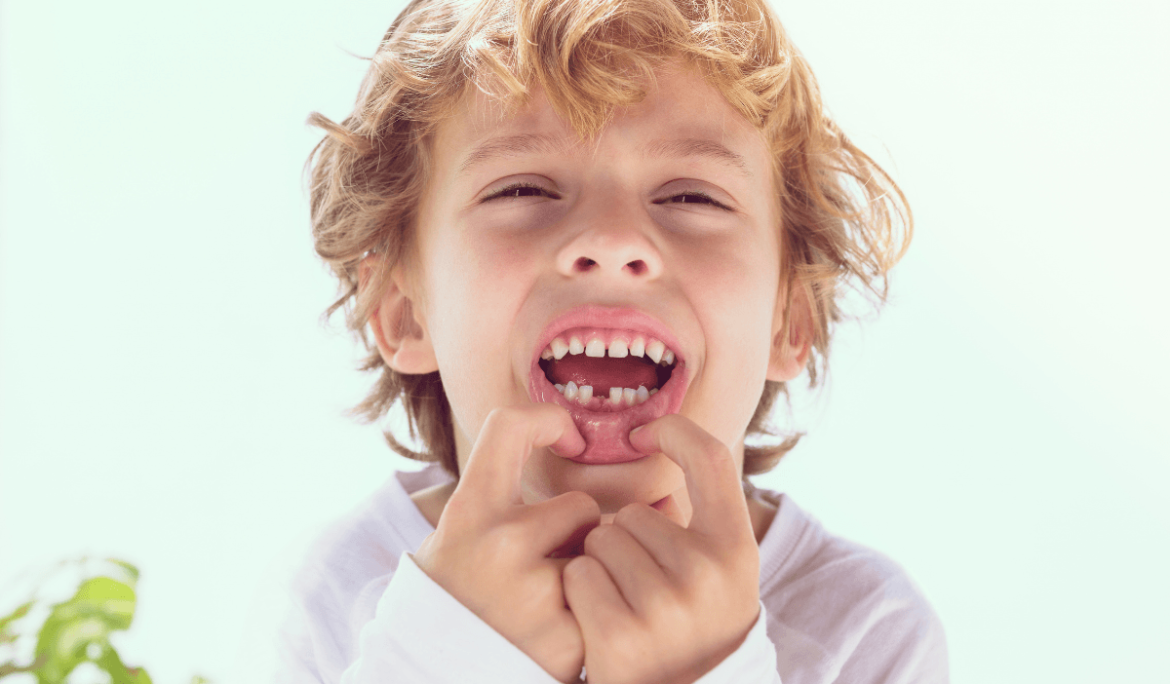
Losing baby teeth is an exciting milestone, but it can also raise plenty of questions about what’s normal and what to expect next. When should it start? Which teeth fall out first? And how do you know if your child’s teeth are developing on track?
Most children start losing their baby teeth at around six years old, although it can happen a little earlier or later. Some children may lose their first tooth around age four or five, while others may not start until closer to seven or eight. Every child grows and develops in their own time, and tooth loss is no different.
Why do baby teeth fall out?
Baby teeth, also known as primary or milk teeth, usually start coming through from around six months of age and continue erupting until about three years old. As your child grows, their adult teeth develop underneath the baby teeth. Over time, the roots of the baby teeth dissolve, causing them to become wobbly and eventually fall out.
In many cases, baby teeth fall out in a similar order to how they first appeared. The lower front teeth are often the first to go, followed by the upper front teeth.
When will my child lose their baby teeth?
While timing can vary, this general guide from the Australian Dental Association can help you understand what to expect:
| Baby tooth type | Approximate age they fall out |
| Lower central incisors | 6–7 years |
| Upper central incisors | 6–7 years |
| Lateral incisors | 7–8 years |
| First molars | 9–11 years |
| Canines | 9–12 years |
| Second molars | 10–12 years |
What can impact this timing?
Several factors can influence when a child starts losing their baby teeth. Genetics can play a big role, so if parents lost teeth earlier or later than average, their children may follow a similar pattern. Nutrition, oral health, general health, and when their baby teeth first came through can also affect the timing. So, if your child’s first tooth emerged early, they will more than likely lose their baby teeth a bit earlier than average. Girls often lose baby teeth slightly earlier than boys, although this is only a general pattern.
What are shark teeth?
“Shark teeth” happen when an adult tooth starts coming through before the baby tooth has fallen out, creating what looks like a second row of teeth. Shark teeth are more common than you might think and are generally nothing to worry about.
In many cases, the baby tooth becomes loose and falls out on its own. However, if the adult tooth has been through for a couple of months and the baby tooth is still firmly in place, it is a good idea to book a dental check-up.
Why is it important to care for baby teeth if they are going to fall out?
Even though baby teeth eventually fall out, they play an important role in your child’s development. They help children chew, speak clearly, smile confidently, and hold space for the adult teeth coming through underneath.
Tooth decay in baby teeth can still cause pain, infection, eating difficulties, and problems for developing adult teeth. That’s why regular brushing, healthy eating habits, and routine dental visits are important from a young age.
When should I see a dentist about my child’s baby teeth?
In many cases, losing baby teeth earlier or later than expected is nothing to worry about. Children develop at different speeds, and there can be a wide range of normal when it comes to their teeth.
Regular dental check-ups are important, even when everything seems fine. Our dentists can monitor your child’s tooth development, jaw growth and bite over time, and address any concerns early before they become bigger problems. It’s also a great opportunity to ask questions and feel confident about what’s happening as your child’s smile grows.
However, don’t hesitate to book an extra dental check-up for your child if you are concerned that they have lost a tooth too early or still have all their baby teeth around age eight, have pain, swelling or excessive bleeding, or if the baby tooth hangs on for longer than a month after the adult tooth comes through.
At Hampton Beach Dentists, we love looking after our younger members of the community and pride ourselves on providing a fun and relaxed environment for the whole family.
To book an appointment, call our friendly team on 03 9598 5666 or book online. Please note that not all appointments are available to be booked online, so please call us if you can’t find a time online that is suitable.